



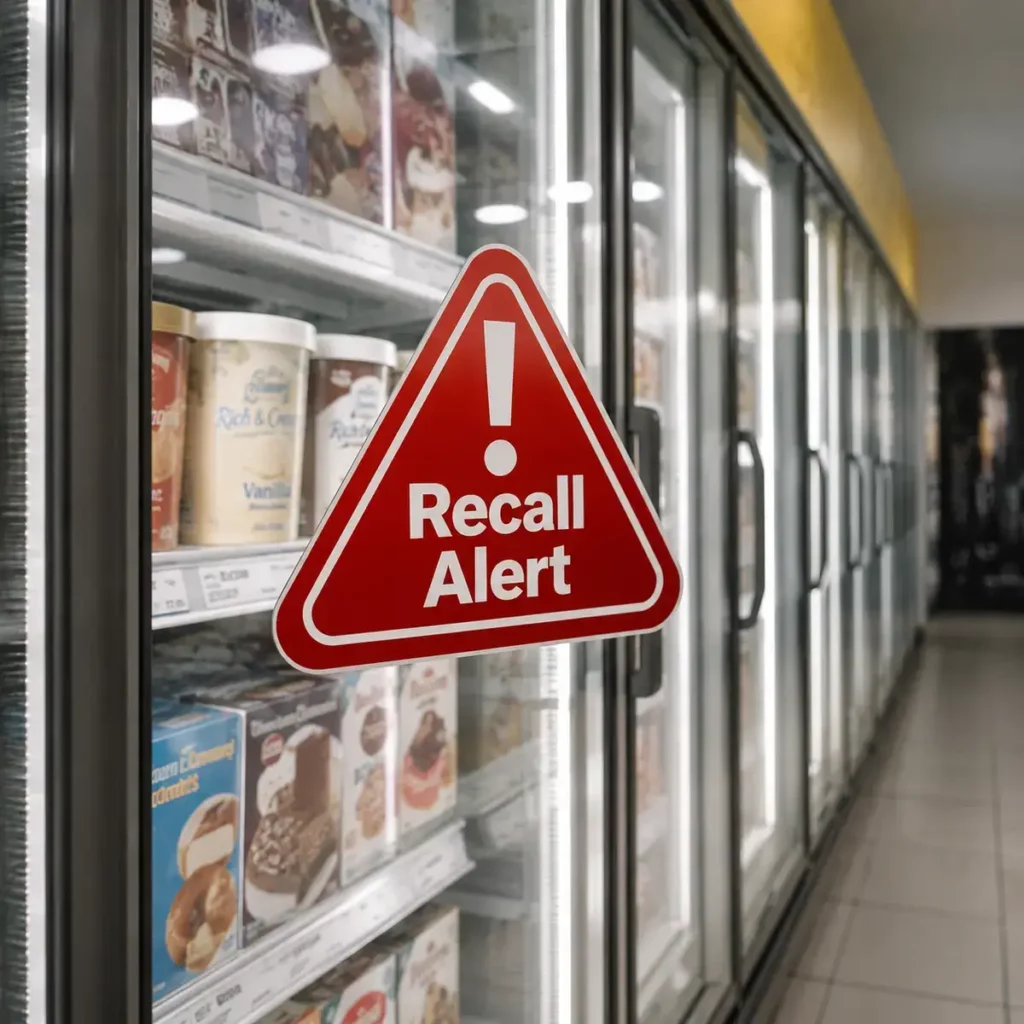
This article covers everything you need to know about the organic ice cream metal contamination recall affecting shoppers across the US right now.
 Save
If you buy organic ice cream at your local grocery store, check your freezer today.
If you're someone who reaches for organic products because you care about what goes into your body, this news hits differently. I remember the first time I stood in a grocery store aisle, comparing labels, choosing organic because it felt like the safer choice. That trust matters. So when word broke this week that a California creamery issued a recall on its organic ice cream due to potential metal fragments, I knew this was something every mindful shopper needed to hear right away.
The organic ice cream metal contamination news centers on Straus Family Creamery, a brand many health-conscious families across the country have kept in their freezers for years. This isn't a rumor or an overreaction. Straus Family Creamery, headquartered in Petaluma, California, issued a formal recall notice stating that a small number of production runs of select flavors and sizes of its Organic Ice Cream were potentially contaminated with a metal foreign material. The FDA quickly moved to share that announcement publicly. For anyone who trusts this brand, that's a serious pause for concern.
When you pair organic eating with smart, comforting meals at home, food safety becomes personal. Over at Pinch of Taste, we share simple and nourishing breakfast ideas because we believe every ingredient in your kitchen should work for you, not against you. That's why we're covering this story.
What Is the Straus Family Creamery Organic Ice Cream Recall?
Straus Family Creamery built its reputation on premium, organic dairy made without synthetic hormones or pesticides. That's exactly why this recall caught so many people off guard. The FDA published a notice confirming that the California-based creamery voluntarily initiated a recall of certain flavors due to the risk of foreign metal material, with affected products distributed across 17 states.
The recall impacts certain pint and quart-sized containers of Straus Family Creamery Organic Super Premium Ice Cream in several flavors. Specifically, affected products include Vanilla Bean pints with best-by dates of December 23 and December 28, 2026, Strawberry in both quart and pint sizes with best-by dates of December 24 and December 25, 2026, Cookie Dough pints with a best-by date of December 26, 2026, Dutch Chocolate quarts with a best-by date of December 27, 2026, and Mint Chip pints with a best-by date of December 30, 2026.
The impacted lots were distributed to retailers in 17 states, including Arizona, California, Colorado, Connecticut, Florida, Georgia, Iowa, Illinois, Indiana, Maryland, New Jersey, Oregon, Pennsylvania, South Carolina, Texas, Washington, and Wisconsin. Products began appearing on shelves as of May 4, 2026. A full list of UPC codes and best-by dates is available on the Straus Family Creamery website at strausfamilycreamery.com/recall/.
| Product | Size | Best By Date |
|---|---|---|
| Vanilla Bean | Pint | Dec 23 and Dec 28, 2026 |
| Strawberry | Quart | Dec 24, 2026 |
| Strawberry | Pint | Dec 25, 2026 |
| Cookie Dough | Pint | Dec 26, 2026 |
| Dutch Chocolate | Quart | Dec 27, 2026 |
| Mint Chip | Pint | Dec 30, 2026 |
 Save
Why Is Metal Contamination in Food a Serious Health Risk?
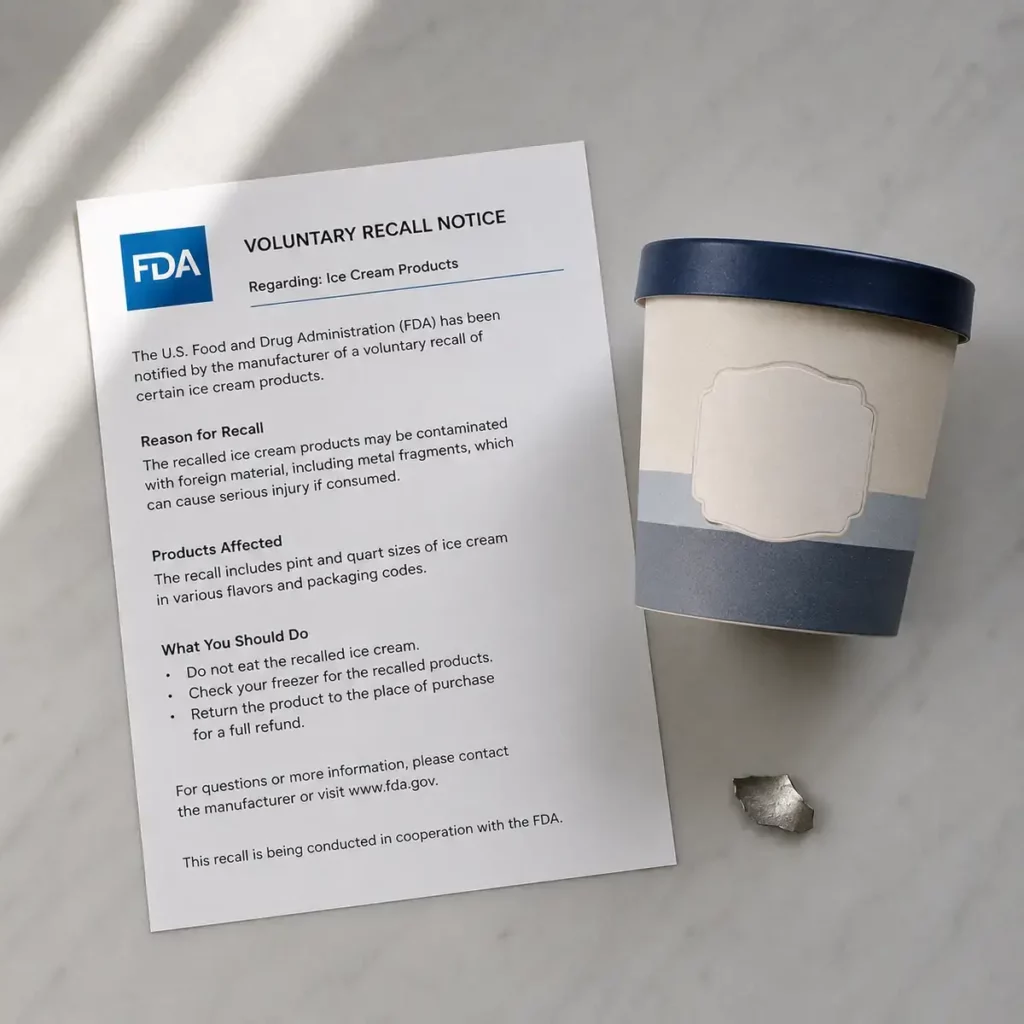
You might wonder whether a small metal fragment really poses that much of a danger. The honest answer is yes, and here's why. According to the FDA, hard or sharp foreign objects in food may cause traumatic injury including laceration and perforation of tissues of the mouth, tongue, throat, stomach, and intestine, as well as damage to the teeth and gums. That kind of injury can happen silently, without any warning, which is what makes this type of contamination particularly concerning.
Food recalls involving foreign objects like metal fragments fall into some of the most serious categories that regulators track. In 2025 alone, the US recorded 613 food recalls, with Class I recalls, which carry the greatest potential to cause harm, increasing by 36.4%, according to a study by Trace One. This trend shows that food safety is a growing concern for everyday consumers, not just those in the food industry.
When metal contamination surfaces in a food product, the FDA typically classifies the recall based on the severity of risk. A Class II designation, for example, means the product could cause temporary or medically reversible health effects, though the risk of severe illness is considered low. However, for children, older adults, or anyone with sensitivities, even a minor internal injury is not something to take lightly.
Organic or not, no brand is fully exempt from manufacturing risks. When a piece of equipment fails inside a production line, metal shavings can enter the product before anyone catches the issue. It's not a sign of bad intentions, but it is a reminder that vigilance matters at every stage of food production.
If you value clean eating and real-food ingredients in your daily routine, this story connects directly to the choices you make at checkout. We've written about nourishing snacks and smart food swaps that keep your kitchen trustworthy and your family safe, and that mission starts with knowing what's actually in your food.
What Should You Do If You Have the Recalled Ice Cream?
The steps here are clear, and you don't need to overthink them. First, go to your freezer right now and look for any Straus Family Creamery Organic Super Premium Ice Cream in pint or quart containers. Check the flavor and the best-by date printed on the package against the list in the section above.
Consumers who purchased the recalled products should discard them and not eat them. The company has also advised consumers not to return recalled items to the place of purchase. Instead, the company said it is offering a voucher for impacted customers who fill out a form online to redeem for a replacement product.
For any questions or support, consumers can reach Straus Family Creamery directly:
| Contact Method | Details |
|---|---|
| [email protected] | |
| Phone | 707-776-2887 |
| Hours | Monday through Friday, 9:30 a.m. to 5 p.m. PT |
No injuries have been reported in connection with the recall, and Straus Family Creamery is working with retailers to remove potentially affected products from store shelves. That's reassuring, but it doesn't change the action you need to take today.
Is This the First Time a Trusted Brand Has Faced a Metal Recall?
Unfortunately, no. Metal contamination in packaged food is not a new phenomenon, and it crosses categories from beverages to frozen goods. Earlier in 2025, the FDA flagged several Coca-Cola products after a voluntary recall was initiated by a regional bottler due to the possible presence of metal fragments in certain soda cans. That recall covered Coca-Cola, Coca-Cola Zero Sugar, and Sprite produced in a specific region.
What connects these cases is the source of contamination. In most situations, the issue traces back to processing equipment rather than raw ingredients. A worn blade, a loosened part, or a faulty machine component can shed small metal pieces directly into the product. This can happen even in facilities with strong quality programs.
The broader picture of food contamination in the US reflects just how complex modern food production is. In 2025, foreign objects, including plastic, stones, glass, metal, and wood, accounted for approximately 3.6% of all FDA recalls. While that percentage sounds small, it represents dozens of real products that reached store shelves before the problem was caught.
This is also a moment to think about what "organic" means in terms of safety. Organic certification addresses the use of pesticides, synthetic additives, and farming practices. It does not guarantee that a manufacturing facility is free from equipment-related risks. That distinction matters when you're deciding whether to trust a recalled product or understand why a brand you love is now at the center of a food safety alert.
Staying informed is one of the most practical things you can do for your household. Alongside smarter food choices, consider exploring wholesome, homemade frozen dessert alternatives that let you control every ingredient from start to finish.
How to Stay Ahead of Future Food Recalls
You don't have to wait for the news to tell you about a recall. There are several simple ways to stay proactive about food safety in your home.
The FDA operates a dedicated recall database at fda.gov, where you can search by brand, product type, or date. Signing up for FDA recall email alerts costs nothing and takes under two minutes. You can also bookmark the USDA's Food Safety and Inspection Service page for meat and poultry-specific recalls.
Another practical step is to photograph or log the best-by dates and UPC codes of products you buy regularly. This takes about ten seconds per item and makes cross-checking a recall extremely fast. You don't need an app or a spreadsheet, just a habit of paying attention.
When it comes to organic ice cream metal contamination or any other food safety concern, the biggest risk is ignoring early information. Most recalls get quietly resolved without major incident, but only because consumers act quickly when the news breaks.
At the household level, a few other good habits help. Store packaged goods in a way that keeps best-by dates visible. Check the FDA website once a week during your regular grocery planning. And teach kids in your household that checking a label isn't just about calories or ingredients, but also about knowing whether a product is safe to eat right now.
We share a lot of cozy, no-fuss dessert ideas here at Pinch of Taste that give you something delicious to reach for while you wait for your freezer situation to get sorted.
What to Expect Next From Straus Family Creamery
Straus Family Creamery said that food safety and product quality remain top priorities, and that the company is taking this action out of an abundance of caution while implementing appropriate corrective actions. That language follows a familiar pattern for voluntary recalls, where brands move fast to address the issue and work alongside regulators rather than waiting to be forced into action.
The good news is that no other Straus Family Creamery ice cream products are included in the recall. So if you have a container in your freezer that doesn't match the affected flavors or best-by dates, you don't need to throw it out. The issue is specific to a small number of production runs, not the brand as a whole.
What happens after a voluntary recall like this typically involves an internal audit of the affected production line, repairs or replacement of the equipment suspected to be the source of contamination, a deep clean and inspection of the facility, and retesting of remaining inventory before it returns to shelves. Straus has not publicly named the specific piece of equipment involved, but that information may surface in FDA follow-up documents.
For consumers, the corrective voucher the company is offering is a meaningful gesture. It signals that they want to maintain the trust of their loyal customer base even through a difficult moment. Whether you choose to redeem it is entirely up to you, but it's good to know the option exists.
Keep in mind that this recall covers only the organic Super Premium line in the specific sizes and flavors listed. The rest of the Straus product catalog, including their dairy, butter, and other products, is not affected by this safety concern.
Storing Dairy Desserts Safely at Home
While this story focuses on a recall, it also opens a broader conversation about how we store frozen dairy products at home. A few simple habits reduce the risk of any food safety issue in your freezer, recalled or not.
Keep your freezer temperature at or below 0 degrees Fahrenheit at all times. Use a small appliance thermometer if your unit doesn't have a digital display. Freeze products in their original sealed packaging when possible, and label homemade frozen desserts with the date you made them.
Check your freezer every two to three weeks for items that have passed their best-by date or that you've forgotten about. Many people discover recalled products simply because they never paid attention to dates. That quick habit of checking can protect your household from a variety of food safety risks, not just metal fragments.
When you do discard a recalled product, don't taste it first out of curiosity. Wrap it securely and place it in an outdoor trash bin so no one accidentally retrieves it. This is especially important in households with young children.
For anyone inspired to make frozen desserts at home with full control over every ingredient, our homemade no-bake sweet treats are a wonderful place to start.
FAQs
Which Straus ice cream products are recalled?
What states are affected by the Straus ice cream recall?
Can I return the recalled ice cream to the store?
Are there any reported injuries from the recalled ice cream?
Can I make this recipe ahead of time?
The organic ice cream metal contamination situation from Straus Family Creamery is a clear reminder that food safety requires active attention, even from brands we trust. The company acted responsibly by issuing a voluntary recall, and you can act responsibly by checking your freezer today. If you own one of the six recalled products within the affected best-by date range, discard it immediately and contact Straus for your voucher. For the most current guidance on food recalls and safety alerts, the FDA's official resource at fda.gov/food/recalls-outbreaks-emergencies is always your most reliable source.
At Pinch of Taste, I'm Nora Grace and I believe great meals don't have to be complicated. I share simple, comforting recipes from quick breakfasts to cozy dinners and mug meals made for real, busy lives. Each dish reflects my warm, honest approach to cooking that's both easy and enjoyable. Stay informed, stay safe, and keep cooking with ingredients you can trust.
Follow us on Facebook and save your favorite food safety tips and recipes on Pinterest.
Comments
Leave a comment
Your email will not be published. New comments are reviewed before appearing.