


Decorative Christmas Ornaments: Two Crochet Spoke Designs
Edited by Nora
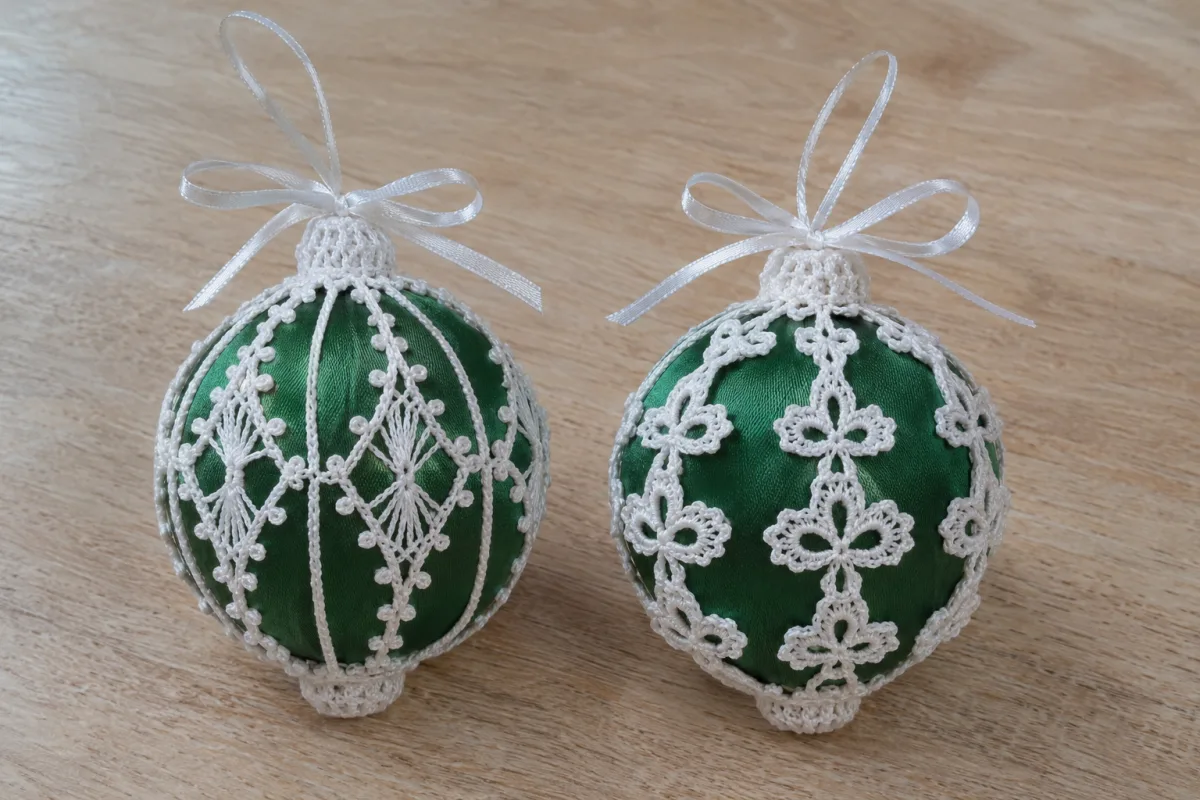
Fine white crochet thread makes an openwork cover for a satin Christmas ball in these two decorative ornament patterns. The Diamond Spoke and Picot Spoke versions share a three-round structure and the same finishing method, but their long decorative sections are worked differently. The finished crochet is shaped over a temporary foam ball, stiffened, then placed around the satin ball that remains inside the ornament.
This is an experienced-level project. The small hook, tall stitches and repeated picot details need careful attention, particularly in the third round. Read the special stitches before starting and keep the two spoke designs separate in your notes. Both ornaments are approximately 3 inches across and are designed to fit a 3-inch-diameter ball.
 Save
Materials, tools and gauge
- Size 10 crochet thread: 1 ball, White. The source's thread brand name is absent from the supplied text.
- 1.5 mm [U.S. 7] crochet hook, or any size needed to obtain gauge.
- 3-inch-diameter foam ball for forming the crochet piece.
- 3-inch satin Christmas ball for the final ornament.
- Plastic wrap, fabric stiffener, ⅞-inch ribbon, ornament hanger and thread needle.
The source notes that one ball of thread makes several ornaments, but does not provide an exact per-ornament consumption. Its product note lists Size 10, Art. 154 in white and ecru at 400 yd, solid colors at 250 yd and shaded colors at 300 yd per ball. Those options are source information, not newly calculated quantities.
Gauge is expressed as fit: each design fits a 3-inch-diameter ball. Check the crochet against that intended size and use the hook needed to obtain it. The foam ball can be reused to form multiple pieces, while each finished ornament needs its own satin ball.
Abbreviations and special stitches
Ch means chain, sc means single crochet, hdc means half double crochet, dc means double crochet, tr means treble crochet, sl st means slip stitch and st means stitch. Parentheses group directions worked into the same stitch; square brackets group directions repeated the stated number of times. Asterisks and double asterisks mark the boundaries named in the instructions. U.S. terminology is used.
Triple treble crochet, trtr
Yarn over 4 times, insert the hook in the indicated stitch and draw up a loop. Work [yarn over and draw through 2 loops on the hook] 5 times.
Treble or slip stitch through a post
Work the treble or slip stitch into the post of the next stitch under the 2 top loops and one more thread at the top of the stitch. The source says this stabilizes the stitch and prevents a hole. This is the specific insertion method intended wherever the post instruction appears.
Triple-picot
Work [ch 3, (hdc, ch 2, sl st) in the third chain from the hook] 3 times, then slip stitch in the same chain as the first hdc.
Diamond Spoke Stitch Ornament
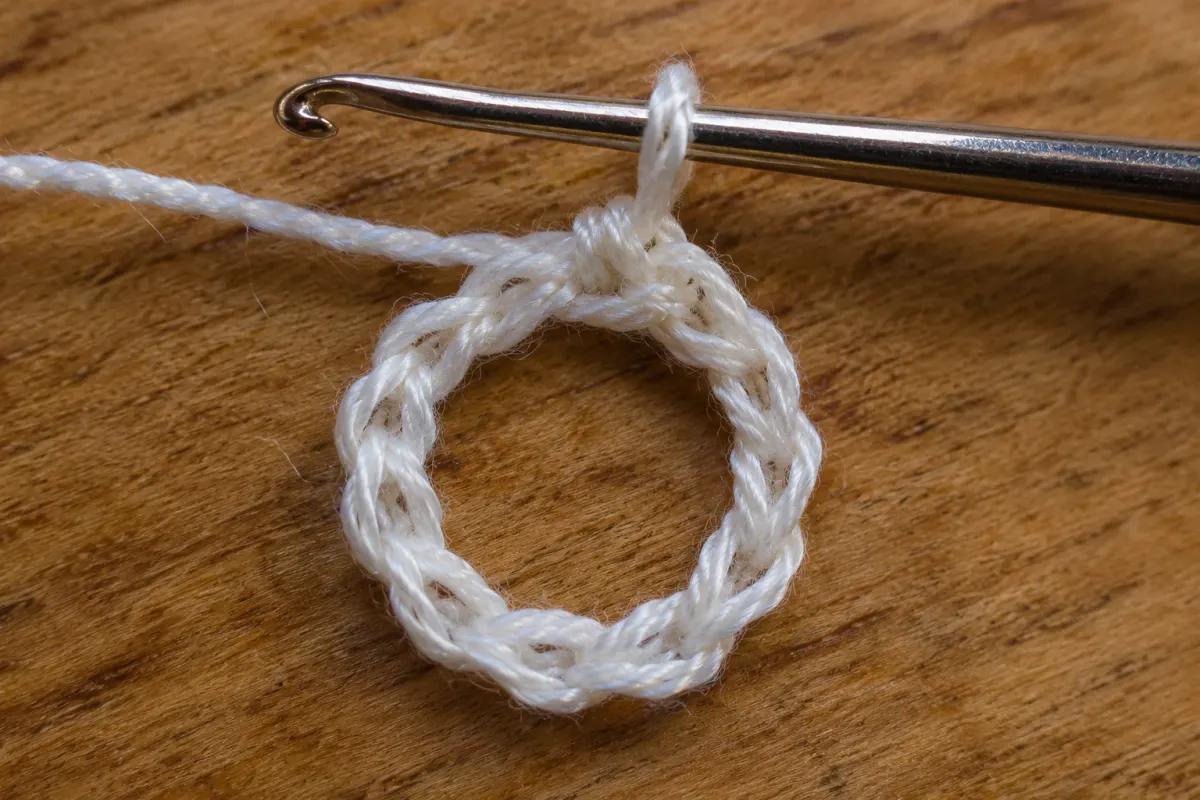
Chain 10 and join with a slip stitch in the first chain to form a ring.
Round 1: Tall-stitch foundation
Ch 6, counting as the first trtr, and work trtr in the ring. Work [ch 3, tr in the ring, ch 3, 2 trtr in the ring] 5 times. Ch 3, tr in the ring, ch 3. Join with a slip stitch in the top of the beginning ch-6. There are 12 trtr, 6 tr and 12 ch-3 spaces.
Round 2: Spoke attachment round
Ch 4, counting as the first tr. Work tr through the top of the post, under 3 loops, of the next trtr. Ch 10. Work [tr through the post of each of the next 2 trtr, ch 10] 5 times. Join with a slip stitch in the top of the beginning ch-4. There are 12 tr and 6 ch-10 spaces.
Round 3: Spoke round
Beginning at *, work [ch 5, slip stitch in the third chain from the hook, ch 2, skip the next chain, tr in the next chain] 8 times. Ch 10 and slip stitch in the top of the last tr made. Work [ch 5, slip stitch in the third chain from the hook, ch 2, slip stitch in the chain under the tr] 8 times. Slip stitch through the post of the next tr of Round 2; this completes one spoke.
Slip stitch in each of the first 4 chains of the next ch-10 space. Ch 5, slip stitch in the third chain from the hook, ch 2, skip the next 2 chains of that same ch-10 space, then slip stitch in each of its last 4 chains. This point is **. Slip stitch through the post of the next tr. Repeat from * around, ending the last repeat at **. Join with a slip stitch in the base of the beginning chain. There are 6 spokes. Fasten off and weave in the ends.
Source wording note: the final join is printed as “base of beginning ch-6 spokes.” The unusual joined wording is recorded rather than replaced with an invented additional chain sequence.
 Save
Picot Spoke Stitch Ornament
Chain 10 and join with a slip stitch in the first chain to form a ring.
Round 1: Double-crochet foundation
Ch 3, counting as the first dc, and work 2 dc in the ring. Ch 3. Work [3 dc in the ring, ch 3] 5 times. Join with a slip stitch in the top of the beginning ch-3. There are 18 dc and 6 ch-3 spaces.
Round 2: Chain-space round
Slip stitch in the next 2 dc. Work (sl st, ch 3, 2 dc) in the first ch-3 space. Ch 6. Work [3 dc in the next ch-3 space, ch 6] 5 times. Join with a slip stitch in the top of the beginning ch-3. There are 18 dc and 6 ch-6 spaces.
Round 3: Picot spoke round
Repeat the following from * around: slip stitch in the next dc, work [ch 5, triple-picot] 5 times, then ch 14. Work hdc in the twelfth chain from the hook and in the next 2 chains. Work [triple-picot, hdc in the next 5 chains] 5 times; the spoke is complete. Work (4 sc, triple-picot, 4 sc) in the next ch-6 space. After repeating around, join with a slip stitch in the same stitch as the first slip stitch. There are 6 spokes. Fasten off and weave in the ends.
Shape and assemble either design
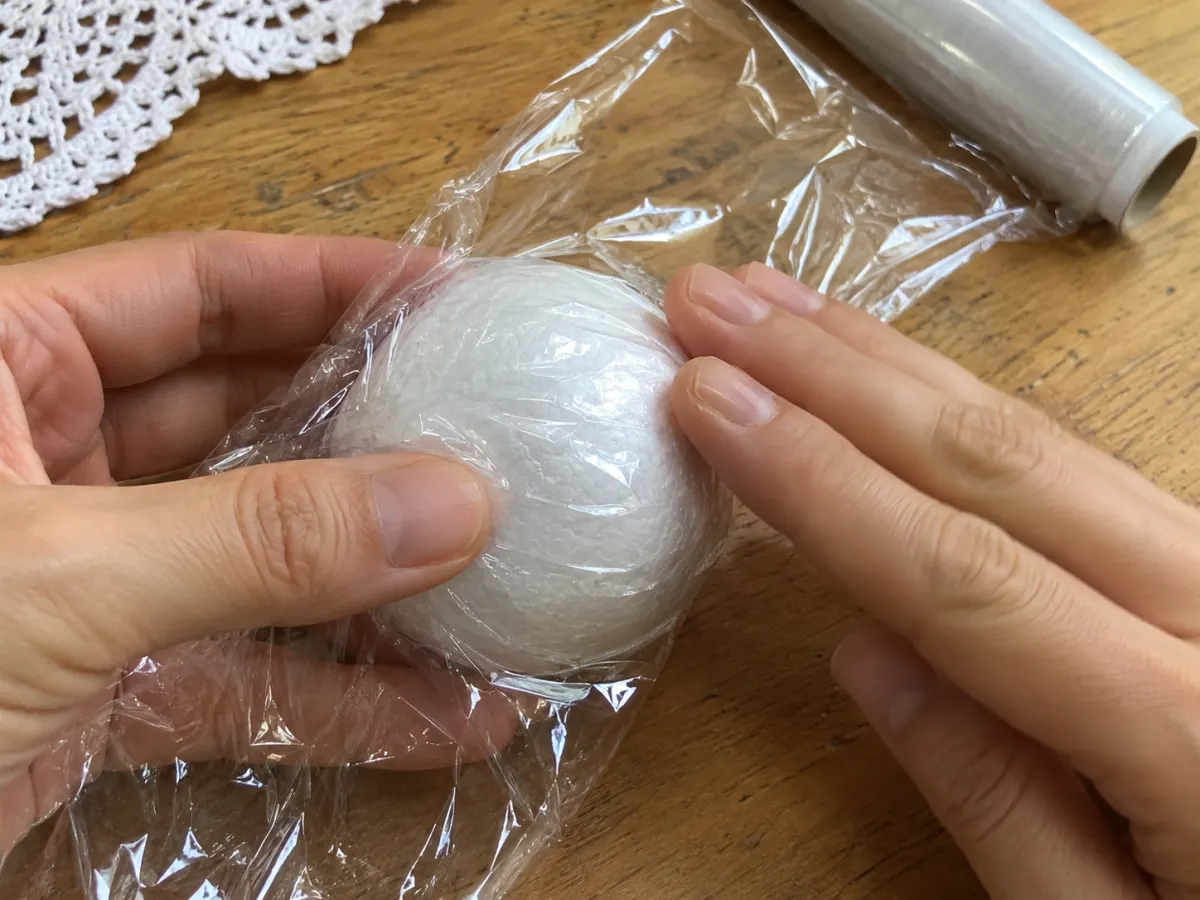
- Cover the 3-inch foam ball with plastic wrap.
- Saturate the crochet in fabric stiffener and shape it around the covered foam ball.
- Allow it to dry. When the piece is rigid, remove the foam ball.
- Insert the satin ball.
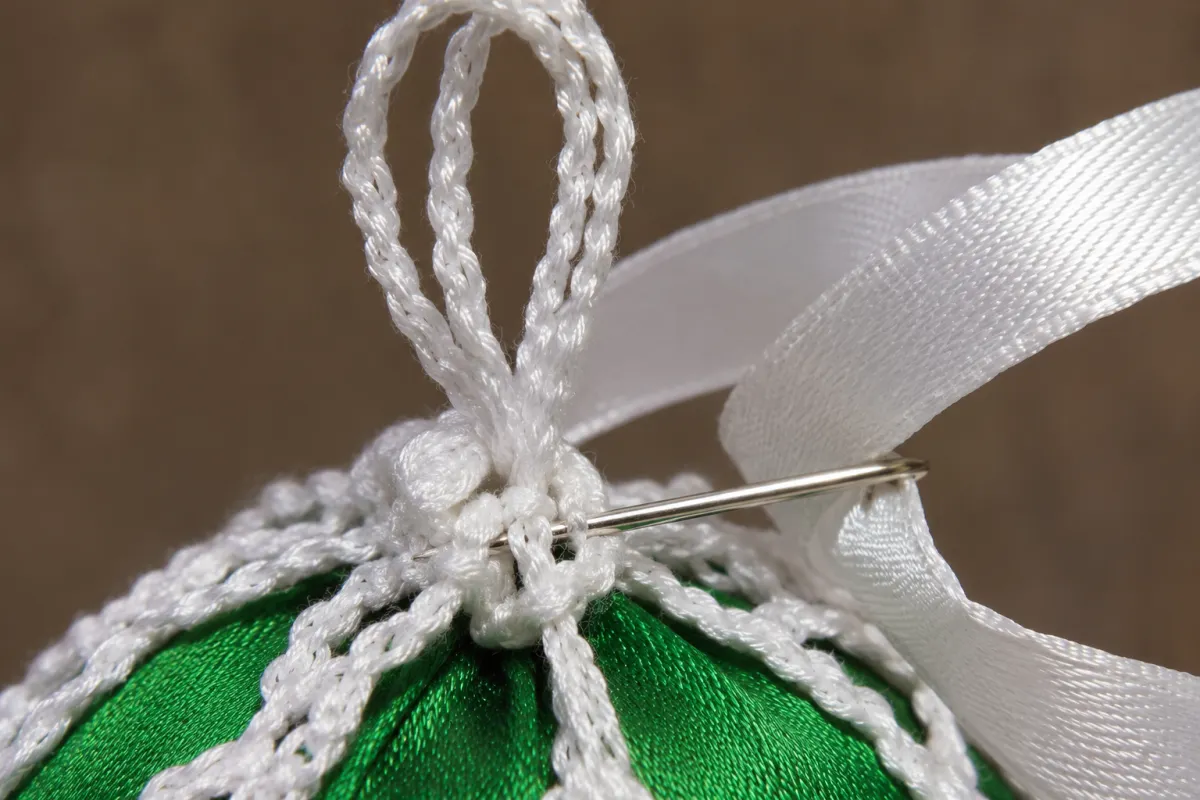
- Tie or sew the loops together at the top.
- Use the ribbon to tie a bow at the top and attach an ornament hanger.
Follow the stiffener manufacturer's handling and drying directions. The source gives no universal drying time or dilution formula, so none is added. Keep the foam forming ball distinct from the satin display ball: the first is removed, and the second remains in the ornament.
 Save
Practical checks for fine-thread spokes
Count the six attachment spaces before starting either spoke round. Each spoke has several small repeats, so it helps to finish and check one complete spoke before moving around the base. A missed picot repeat is easier to locate while that spoke is isolated than after the crochet has been stiffened.
In the Diamond design, distinguish the outward sequence of treble-based groups from the return sequence of slip-stitch groups. They are not the same operation repeated twice. In the Picot design, the triple-picot is itself a defined stitch group; keep its three internal repetitions separate from the five repetitions along the spoke.
Check the crochet fit before applying stiffener. Shaping is the finishing process described by the source, not a substitute for making a cover that fits the intended ball. Do not assume extra stiffener will correct an incorrect stitch count or an added spoke.
Inspect the top closure before adding the bow
The ribbon decorates the top after the crochet loops are tied or sewn together. It should not be treated as the only closure if the loops underneath remain unsecured. Check that the satin ball is properly enclosed and that the crochet is dry and rigid before finishing the ribbon and hanger. Handle the shaped thread gently while attaching those final elements, because the stiffened form is the finished openwork structure rather than a flexible fabric cover intended to be stretched repeatedly over the ball.
 Save
Useful questions
Does each ornament need a foam ball?
The same foam ball can be reused for forming several pieces. Each completed ornament needs its own satin ball.
Do both versions use the same finishing?
Yes. Both are stiffened over a plastic-wrapped foam ball, dried, removed and fitted over a satin ball before the top loops, ribbon and hanger are finished.
How many spokes belong to each design?
Both have six. Their foundations and decorative spoke stitches differ, so follow the complete directions for the version you choose.
Can I leave the foam ball inside?
That is not the supplied construction. The source removes the forming ball after the crochet becomes rigid and inserts a separate satin ball.
Choose one spoke design, check its repeats and complete the shaping process before adding the ribbon. Explore more projects on Facebook and Pinterest.